

How to Fund a Revocable Living Trust in Wisconsin (and What Happens If You Don’t)
A revocable living trust only controls property titled in its name. Sign the trust agreement, file it in a safe place, and leave your home and accounts in your own name. Much of what you own will still be subject to probate court proceedings. That is exactly what the trust was designed to prevent. Unfunded… Read more

When Should You Update Your Estate Plan? 7 Life Events That Trigger a Review in Wisconsin
Wisconsin law can change parts of your estate plan without your knowledge. A divorce may cancel some gifts. A new spouse or child may receive a share that you never mentioned in your will. Consider these seven events as review points for your estate planning. 1. Marriage or Remarriage Marriage doesn’t cancel a will that… Read more

Navigating Probate in Milwaukee County and Waukesha County Courts: A Step-by-Step 2026 Guide
Whoever holds the original has 30 days from the date of learning of the death to file it with the probate register. This duty applies even if the family has decided that an estate does not need to be opened. Wis. Stat. § 856.05 makes anyone who ignores this liable to every person affected by… Read more

Guardianship vs. Power of Attorney in Wisconsin: Protecting an Aging Parent in Waukesha County
You cannot sign a power of attorney for your mother. Wisconsin requires her to understand what she is giving up when she signs. Once she has forgotten that point, the window of opportunity closes, and all that remains is a petition for guardianship in Waukesha County Court. Collins Law Firm sees this gap more often… Read more

What Happens to a Business When the Owner Dies in Wisconsin?
A single-member LLC in Wisconsin dissolves 90 days after the death of the member, unless someone with authority accepts a new member before the deadline. The clock doesn’t wait for the family to find an operating agreement, it doesn’t pause for grief, a funeral or the four weeks it takes to open a probate file…. Read more

Do Stepchildren Inherit in Wisconsin Without a Will?
A stepchild who is raised from kindergarten to college inherits nothing under Wisconsin’s inheritance law. Not a reduced share, not even a last resort share after every other relative has been eliminated. The state school fund takes precedence over that child, and most blended families are unaware of this. Wisconsin Lists Its Heirs, and Stepchildren… Read more
Can You Contest a Will in Wisconsin?
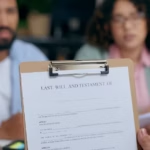
Being left out of a will or being left with less than expected is not, in itself, a reason to challenge it. Wisconsin courts reject claims based on disappointment. To succeed, you need two things that the law actually recognizes: the right to object and a legal basis for invalidating the will. If you miss… Read more

What Is a Small Estate Affidavit in Wisconsin and When Can You Use It?
If someone close to you dies with $50,000 or less in assets, you may not need to go through probate. Wisconsin allows you to collect and transfer these assets with a form called a “Transfer by Affidavit”. The rules are in Wis. Stat. § 867.03 and, if used correctly, this process can save your family… Read more

What Happens to Jointly Owned Property When Someone Dies in Wisconsin?
The deed controls the outcome, not the will. This is a fact that many Wisconsin families discover too late, after a loved one has passed away and the question of who owns the house has no clear answer. How property is titled determines what happens to it at death, often regardless of any estate plan…. Read more